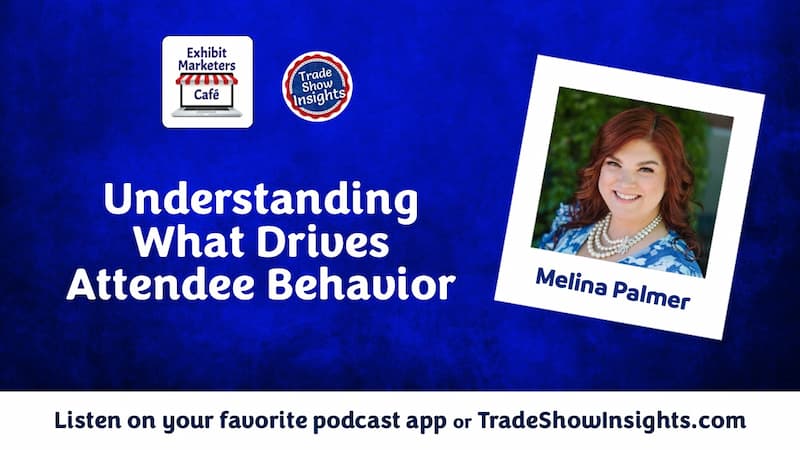
Ever wonder why some exhibits draw crowds while others get ignored?
It’s not luck. It’s science.
Specifically, it’s behavioral economics.
I invited one of my favorite authors, Melina Palmer, to break down the brainy secrets behind attendee actions and how every element at your show can affect their behavior.
You’ll learn how to:
- Design experiences that sync with attendees’ brains
- Offer moments of surprise & delight
- Lean into stories and emotion (Spoiler alert: You are not the hero!)
- Master the art of follow-up
- End on a high note
Here are links to resources mentioned during our interview:
- The Brainy Business (Melina’s website)
- The Brainy Business podcast (listen to the following episodes to learn the basics: 9, 11, 12, 14, 15, 16, 18, 19, 20, 21 & 23)
- Melina’s books: What Your Customer Wants and Can’t Tell You and The Truth About Pricing
- Connect with Melina on LinkedIn and YouTube
- Download the “You’re Not the Hero” worksheet (that goes with episode #571)
(In the spirit of full disclosure, the book links above are my referral links, which means if you click on them to purchase through Bookshop.org I may receive a small reward. Thanks! ~ Marlys)
About Melina Palmer
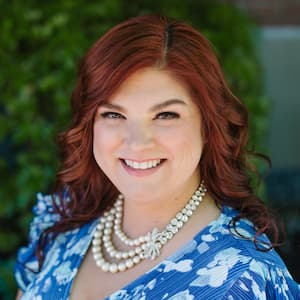
When the world’s most influential brands need to understand why people really make decisions, they turn to Melina Palmer.
Her chart-topping podcast, The Brainy Business, has more than 1.5 million downloads from over 170 countries, and her three bestselling books have earned multiple international awards. She teaches applied behavioral economics via Texas A&M University, has been featured in The Washington Post, Forbes, Inc, Investopedia, and Business Insider as well as graced the stages of TEDxPortland and South By SouthWest.
Known for taking complex science and turning it into practical strategies that drive meaningful change, Melina loves training corporate teams on why customers buy and employees buy-in.
Marlys Arnold [00:00:00]: You're listening to the Trade Show Insights podcast, Season 21, Episode 7. I'm your host and exhibit marketing strategist, Marlys Arnold, bringing you tools to improve your exhibit results. On today's episode, brought to you by the Exhibit Marketers Cafe, we're talking about the psychology behind attendee behavior and some of the opportunities it presents. Have you ever wondered what truly drives human decisions? Our guest today has unlocked the hidden psychology behind why people do what they do or buy what they buy, and her insights will transform how you think about human behavior. When the world's most influential brands need to understand why people make decisions, they turn to Melina Palmer. Her chart-topping podcast, The Brainy Business, has more than 1.3 million downloads from over 170 countries, and her 3 best-selling books have earned multiple international awards. She teaches applied behavioral economics via Texas A&M University. She's been featured in The Washington Post, Forbes Inc., Investopedia, Business Insider, as well as graced the stages of TEDx Portland and South by Southwest.
Marlys Arnold [00:01:57]: Known for taking complex science and turning it into practical strategies that drive meaningful change, Melina loves training corporate teams on why customers buy and employees buy in. Welcome to Trade Show Insights, Melina.
Melina Palmer [00:02:12]: Oh, thanks so much. I'm delighted to be here.
Marlys Arnold [00:02:15]: And I have to say, I am in the process of reading— I'm an overachiever, so I'm actually reading What Your Customer Wants and Can't Tell You and The Truth About Pricing.
Melina Palmer [00:02:26]: Yay!
Marlys Arnold [00:02:27]: I'm partway into both of them, so I'm excited to dive into these topics today, especially, you know, thinking about how this relates to the show floor, you know, the trade show floor. Um, you know, let's back up though first. For somebody who doesn't know, can you give us kind of a little snapshot of how does behavioral economics explain or influence customer experiences.
Melina Palmer [00:02:51]: Yeah. Well, and I think even, you know, step back from that, for those that are like, wait, what even is behavioral economics? You know, what are we talking about here? You know, I like to just say, you know, if traditional economics and psychology had a baby, you have behavioral economics. And essentially, the reason that the field exists is because traditional economics assumes logical people making rational choices in everything they do all the time. And it's based on like what someone somewhere thinks people should do. But like, you don't know, right? Like, I guess in that way, like, what's logical to, you know, uh, computer typing of a brain? Um, and so, you know, what we know over time is like humans don't really work in that way. Like, we— if it was enough to just know that you should, you know, walk for 30 minutes a day and eat less calories than you burn, like, we, you know, we would be all set, right? But we know that's not really how it works. Um, and so what you ended up with is, you know, economic models that don't really predict what people actually do. And so over time, you had people in from psychology and economics and neuroscience and philosophy and all these fields, like, working together, entering one another's fields, trying to see if there were ways to better predict what people actually do and why.
Marlys Arnold [00:04:09]: Right.
Melina Palmer [00:04:09]: Right. And so thankfully, there are a lot of those concepts. And that's where the field of behavioral economics comes from. And so with that in mind, you know, something to note is that research shows humans make, on average, about 35,000 decisions each, every single day.
Marlys Arnold [00:04:29]: Wow!
Melina Palmer [00:04:29]: Like we are constantly in a state of choice, right? If you break that down, you know, assuming, you know, people are sleeping 8 hours a night— you're welcome— like at least in this sort of dream state here, you know, that means we're making a decision, like one decision every 2 seconds. or so, like a little bit less than that.
Marlys Arnold [00:04:49]: Wow.
Melina Palmer [00:04:50]: And that can be pretty overwhelming. Like, and if I asked you, like, how many decisions do you remember making yesterday?
Marlys Arnold [00:04:57]: Not nearly 35,000.
Melina Palmer [00:04:58]: Yeah, I know, right? But there's usually— someone's like, I don't know, 4, right? Like 2. I don't know, 10. Yeah. And like, if we're pressed, I could come up with 100 or, or something, but you just really can't get to those specific decisions. So like, how do we actually like function if we're not making those choices on a conscious level? We don't remember them. It's because our brains run on habit, predictability, the status quo, like what has worked in the past. And so the vast majority of what anyone does in any day in our life experience is based on the— that predictability, the, the habit, that subconscious decision making. And so what behavioral economics really looks at are what are the rules, the concepts that the brain tends to lean on to make its decisions in that subconscious state.
Melina Palmer [00:05:52]: And since most decisions are done in that way, if we understand how to apply the way that we say something, the way we present information to line up with those natural brain processes, you know, then you're more likely to have people, like customers buy in, employees buy in, right? The, the problem is conscious and subconscious brain don't speak to each other. They don't speak the same language; they don't work together at all. And so when you sit down and say, hey, if I was a human person attending an event, what might I like? You know, if I was getting an email, what would I click on? You're thinking from that conscious state of what you think people will want. And not on the receiving end of the subconscious that's buying the thing. And what we like to think we do and how we like to think people act is just not typically correct.
Marlys Arnold [00:06:46]: Well, and I've also heard it said that, you know, when you try to do like a customer survey, don't believe what they tell you because what they tell you and what they actually do are not necessarily the same thing.
Melina Palmer [00:06:58]: Yeah. There's a reason the book is called What Your Customer Wants and Can't Tell You. Right? Because people don't even know in that same way. And there are studies done where they have someone in an fMRI machine. It's just like an MRI, but so it's looking at brain activity. And if you ask someone, like, so if they watch a commercial or they buy something, like, through a process, and you ask them why they did whatever it was, you can, like, watch the brain lie to itself about why it did something. Like, it just does not know most of the time.
Marlys Arnold [00:07:33]: Okay, so, so going back then, now that we have that framework, then how, how can we use, or how can we study the behavioral economics to understand how that's influencing attendee behavior at a conference or a trade show?
Melina Palmer [00:07:48]: Yeah. So being able to learn and understand the concepts is a helpful place to start. But there are hundreds of them. So, you know, you don't have to start with all of those. On, on my show, The Brainy Business Podcast, I have episodes dedicated to all sorts of concepts. And so you can just, you know, listen to some of those if you want to learn more, but we'll talk about some today as well.
Marlys Arnold [00:08:10]: And we'll, and we'll have links to some of those in the, uh, show notes as well so people can check those out. But let's kind of— it's just the, the big story here is that trade shows are overwhelming. I mean, you walk into a trade show and it's just, you know, you got light, you got sound, you got people going every which way. I mean, it's just, you know, especially for like an introvert, It's just so much.
Melina Palmer [00:08:36]: Mm-hmm.
Marlys Arnold [00:08:37]: So what are some of the things that— well, let's start on the show organizer side first. What, what are some things that a show organizer can do to design an experience that is— what I want to say— in sync with attendees' brains and how they're functioning and, and try to kind of It's always hard because when you talk about behavioral economics, people can take it too far and take it into a manipulating way. And that's not what we're trying to do. But how can an organizer frame their event so that it works in conjunction with the attendee, the way the attendee's brain works?
Melina Palmer [00:09:19]: Yeah, absolutely. And just like a quick note on the ethics manipulation question that's there for anybody that's his thinking on that. Whether you think about it or not, the way you present information is impacting the decisions people make, the way that they act, no matter what. So whether you consider the science of it or not, you are impacting— like, if you put things on a list in alphabetical order versus reverse alphabetical versus random, it will impact the choice that people make. It just does anyway. And so in my opinion, like Better to be thoughtful about it than not, right, is, is a way to go about that. And in behavioral science, we also always have a space of free choice. So we work in nudges, not shoves, is sort of the way that we look at that.
Melina Palmer [00:10:08]: And so people can always do something else. And having that free choice is something that's helpful. Like, we're presenting what we think is the best option, and you can do another thing if you so choose. Uh, so when we look at this idea of being the event organizer, so anytime I'm working with a client, for one, what I'll always ask people is like, what do you want people to do, right? So this is the place we start, which seems like a very basic question, but as we start to break it down—
Marlys Arnold [00:10:38]: Right.
Melina Palmer [00:10:38]: And we say like, so if you only get one thing, right, it's the end of the event and people are remembering the thing like, what is the one thing that matters the most that you want from them? And you have a few different stakeholders that you need to consider in this case, right? So of course, you have vendors that want as many people as possible coming by their booths in that, you know, experience, right? And that they want to get as many clients as possible and whatnot. But you also don't want to overwhelm people and have it feel like you're being, you know, used car salesman every moment, right? Nobody wants that.
Marlys Arnold [00:11:17]: No.
Melina Palmer [00:11:17]: Um, you want to have like all these possible things and lots of stuff that's exciting. Um, but maybe you, like you said, you also want to be able to give people a breather, to have some free space. And like, yeah, we have a lot of raffles and things that happen, but, um, like where's the, like, why are we looking to interact with people? Like, is it better to have sections of, like, maybe it's zones that are, like, if you really are interested in a conversation, or I know I've seen where people have different, like, a button or something if they want to have a conversation versus if they're just looking, or, you know, there are ways to be able to—
Marlys Arnold [00:12:01]: Yeah.
Melina Palmer [00:12:02]: maybe help determine who's looking for, for what in those cases.
Marlys Arnold [00:12:07]: Like facilitating that.
Melina Palmer [00:12:09]: Yeah, and helping, right? And so I think too, like, is there a zen space anywhere? Is there any room in your agenda? That's like another thing that I've— I've been to a lot of events, and most often everything is crammed right up against Everything else. There is no free space. There's no opportunity for anything. Everybody has to try to go to the bathroom at the same time and is like getting lunch at the same time. And it's just all the herding of people all the time in a way that just adds to feeling overwhelmed, right?
Marlys Arnold [00:12:46]: Well, and that, that is a big discussion right now in events is that, that overstuffed agenda. Because, you know, we all know that sometimes the best moments that happen at an event are the unexpected, the, the serendipitous moments. But it's like, if everything is so overscheduled, there's no opportunity for any of those kinds of moments. So I think, would you say that an organizer needs to kind of put on their attendee hat and think like, you know, how would they walk the show or attend the event as an attendee and think about what are some of those moments maybe that they can leave gaps for, or like you said, have, having—
Melina Palmer [00:13:26]: Yeah.
Marlys Arnold [00:13:27]: particular activities that facilitate those kinds of connections.
Melina Palmer [00:13:34]: Absolutely. And like good reflection spaces and things like that. Like you can make the space fun in a way that a lot of events do a really good job about, right? But like, it doesn't have to feel exactly like every event. I spoke at an event about a year ago, maybe 18 months now, that was really, really thoughtfully done. And they had this huge, like, recreated tree in the middle of the event space. And there were— the theme of the conference was Believe. And they had all these leaf, like, paper leaves. You could pick one and it said, like, I believe, and everybody would take a time like a moment to write their belief on the— a leaf, and they got added onto this tree.
Melina Palmer [00:14:25]: So it was like growing over time, but it's like an opportunity to write. They also had a station where they had people were teaching you to make origami flowers, um, and how to fold them, and they were turning them into this big wall. So you could either just pick up ones that were already made if like, I'm not gonna make one, or if you wanted to take a minute to learn how and help to make other flowers to make this like living wall that was sort of being created throughout the event. And so if you ever need a moment, you can go be a part of something like that. But, you know, you can also just be part of sessions as they're taking place as well.
Marlys Arnold [00:15:01]: Yeah, I think that is really key of, like, like you said, giving people— well, in fact, that, that's another point that I wanted to talk about is some elements of surprise and delight. And I think that's so important with events as well is, you know, not being— you know, especially if it's a conference that happens every year, you know, people are used to going. Maybe they've attended for, you know, 10 out of the last 15 years or something. But to be able to offer them something different, something unexpected, um, you know, we talk about Easter eggs, and of course one of the best examples of that is Taylor Swift and all the different elements of surprise and delight that she brings. But what are some ideas of ways, how can you, how can you construct moments of surprise and delight? I mean, I think it kind of goes back again, like you said, to starting with the end result, and then working backwards. But how do you get to those?
Melina Palmer [00:15:59]: Yeah, so the, I know we were talking about kind of that overarching event experience and things as well. So One of the kind of fundamental concepts in behavioral science here is the Peak-End Rule. So if we're at the end, and we're looking back and saying, how was that event? Hey, you went; should I go next year? How was it? Right? The way that we make those decisions really are balanced on 2 moments more than any other. Everything gets kind of averaged out for these, and that is whatever the peak was, positive or negative, and how it ended, the last moment, right?
Marlys Arnold [00:16:32]: Hmm.
Melina Palmer [00:16:33]: And so we'll talk a bit about the end in a second. But if you think about the peak, that can be, like I said, good or bad. And so if it's super overwhelming and you're feeling a lot of stress or you can't find where you're supposed to go or everything was like, there wasn't room to sit or whatever else, that is something you want to remove those negatives before you think about incorporating the delightful surprise stuff. That matters too, but make sure there's not really bad surprises.
Marlys Arnold [00:17:02]: Not bad surprises.
Melina Palmer [00:17:03]: Yeah. Because those really can be a problem.
Marlys Arnold [00:17:06]: Yes.
Melina Palmer [00:17:06]: Um, but then if you look and find, you know, a couple of things that are just delightful that you don't have— it's not like a guarantee that's always going to be there, um, but something that's unexpected and positive— that is something that can be those peak moments that can help to carry through when we look back and there's like the story about that thing that happened that was so cool. So that could be You know, something in an actual session, right? So if you have a big, like, keynote type of event, but then all of a sudden there's a, like, juggler that comes through, or I don't know, something that would be fun or interesting or, like, surprising, you know, that is something that's like a wow factor that everybody experiences in one moment. You could also have something like the place to do origami or to play a game or Um, to be able to— like, there's something in a bag or something in the hotel room or something in that trade show that you weren't expecting to get. Like, we've all been to enough trade shows and events to know the basic— there's like, someone's gonna have a stress ball, someone's auctioning off AirPods, someone is gonna have like the spin the wheel, someone's gonna have like— it's a— there's a stuffed animal somewhere. Like, all the same stuff that's there all the time. And so like what might be more delightful of an experience when with those like giveaways or opportunities within that are just different from what you see every single place that you go? It doesn't have to be everyone all the time, but maybe if you had all those, you know, vendors come together and think about something that would be out of the ordinary here. And uniquely inspiring them to be delightful could be, be helpful. And it's not, again, that every moment all the time has to be that.
Melina Palmer [00:18:59]: But look for something that can have that peak spark. Right.
Marlys Arnold [00:19:06]: Well, and like you said, it doesn't have to be, it doesn't have to be constant. And it doesn't have to be huge. It could be something that's small, but it's still a surprising twist on something, right?
Melina Palmer [00:19:22]: Or just like thoughtful and showing that you cared enough. Like, I've seen where it's the, um, you know, it could be that there's candy in the bags that you get, or there's, um, like it's easy to get the water or, um, like Simple stuff that is hard to find at some of these type of events sometimes, but really can help you sustain.
Marlys Arnold [00:19:48]: Or one of the things that is a pet peeve of mine, and I've been seeing a lot of people sharing photos of what not to do on, on LinkedIn lately, is why nobody ever thinks to provide seating, like in the aisles or, you know, in the hallways or stuff. And people are all sitting on the floor. like checking their messages or trying to eat their lunch or whatever. It's like, you know, why not have some surprise and delight of some wonderful just lounge areas? You know, I've been to some events where they had these really nice lounge areas in the lobby, you know. And so you had areas where you could go and it wasn't just like, let's throw a bunch of benches out here. It was, you know, there were some plants and it just, it had like this whole theme or this whole atmosphere to it. And it's like—
Melina Palmer [00:20:33]: Right.
Marlys Arnold [00:20:34]: You know, again, it's not something that is just totally out of the box. I mean, it should be something that shouldn't be that much of a surprise and delight. But I mean, it shouldn't be that much of a surprise. It should be something that you want to do to delight your attendees.
Melina Palmer [00:20:49]: Well, and even like on that note, I think it's like having charging stations that are available. And maybe it's, you know, if the rooms are ones that have Like, it's, and it's not like you had to remember your charger, but we actually have the cords that are available at, you know, if there are tables in sessions or available around. And even to say, you know, we've got this like green space if you want to go sit amongst some different like trees or plants or something. I mean, maybe a crazy idea, but like everybody, quote unquote everybody, most everybody loves puppies, right?
Marlys Arnold [00:21:26]: Yeah.
Melina Palmer [00:21:26]: you could have a little puppy petting area if you want for people to go like interact with, uh, something that's kind of just delightful and adorable. Like have sessions to be able to go like chat with people while you're holding a puppy. Like that sounds nice. I wouldn't hate that.
Marlys Arnold [00:21:41]: Um, well, and the cool thing, not to go down another rabbit hole here, but you know, just FYI to all the organizers listening, all of these things we've been mentioning are great sponsorship opportunities. So it's not like you have to just come up with the budget and do all these things. But think about what would be your surprise and delight elements, and then offer those out as sponsorships. And then bring, you know, bring, bring it all together where you're satisfying an attendee need, but you're also, you know, turning it into a sponsorship opportunity at the same time. So I think that, you know, there are so many options to do things like that.
Melina Palmer [00:22:19]: Yeah. And just having that space for the networking and making it easy for people that aren't comfortable starting a conversation? So like, is there, um, something with the conversation starters? Or if it is, you know, whether it's on a, um, with your registration or a bag, if it's like find someone who— I've seen, uh, different options where it's like if I have a blue diamond on my, um, badge and you have an orange diamond and someone else has a blue square or whatever, and it's like find somebody who has the same shape or the same color as you and have a conversation with them.
Marlys Arnold [00:22:54]: Yeah.
Melina Palmer [00:22:54]: Like something to help, like, have a reason to go up and talk to somebody, um, even as silly as that.
Marlys Arnold [00:23:01]: And it gamifies it, you know, doing something like that, it becomes a game. It's not so much like, oh my goodness, I have to talk to somebody, but it's like, I have to find the person that matches my badge, you know. So it becomes more of like a, a fun adventure that way. So let's switch gears now. We talked about some of the things the organizers can do. Let's talk about how can exhibitors use some of these behavioral concepts to craft more compelling exhibits, you know, to draw people in and also to inspire, inspire people to take action?
Melina Palmer [00:23:36]: Yeah. So I mean, a lot of what we were already talking about, right? Like we've all seen the, the same basic booth experience that you have a lot. So if you can get out of what everyone else is doing, that can be interesting. Sometimes there's lots of good budget to do something like that. Sometimes there's not. But even that thing we're talking about, the, like, the tree and write your thought on it or something, like, you could make that pretty inexpensively if you wanted to do something along those lines. What I think is really great is when the vendor, exhibitor, whatever we want to call that, that they're able to, like, lean into the, like, an emotion they help somebody with or something that's on this deeper kind of brainy level to be be the idea of the little thing that's the experience that's like one piece of all of what they do, right? So I always think one of the greatest examples from branding that I think is Jake from State Farm and that original commercial, right, where it's like, yeah, 2 AM, who is this? You know, and he's wearing khakis, right? Like, but like State Farm does 1.5 million things. And actually, everyone has like 24/7 claim service.
Melina Palmer [00:24:53]: But like, when it's on a list, it doesn't mean anything like that. But when it's like, I'm stressed, it's the middle of the night, I call, there's somebody there— like, they're saying a whole lot with that moment, right? And they happen to make it funny. And I know if I'm stressed, I can call State Farm, right? Like, I make that mental connection. That's like how our brains associate. And so they personified it. Yeah, yeah, for sure. And so like, I um, worked at a financial institution, ran a marketing department there. The thing that we gave away that everybody wanted and was like over the moon for was just $1 bills was our giveaway.
Melina Palmer [00:25:29]: And people thought it was the greatest thing ever. And we had little sticky notes on them saying you could use this, and if you open an account, you get like $25 or something, or you can just take the dollar, right? And people were like, is it really? It's real money?
Marlys Arnold [00:25:44]: Like, oh, it's like, yeah.
Melina Palmer [00:25:45]: And it's It's so much less than any other, you know, tchotchkes and things you're buying for the, these sorts of events. But it, and it made sense, you know, as a financial institution. I did something similar for an accountant that was a client to have dollars that they gave out. And it's talking about, like, then your conversation can be about, like, saving you money and keeping those dollars, and we care about whatever. And so if you think about the stress that people feel or other aspects of a problem you solve for them or a feeling that they want to have, Like, how can you personify that? How can you turn that into something interesting, like a fun play on words or something they're able to experience, that then can be like a later conversation about what it is that you do, and they'll remember you through that process? If it's just like, hey, hey, hey, guess what I have? Like, yeah, then I'm— I don't want to talk to you.
Marlys Arnold [00:26:41]: It takes this big, high-minded concepts and concept and makes it more tangible, you know, so people can actually relate to it. Or in the case of giving them a dollar bill, they can actually like physically touch it.
Melina Palmer [00:26:52]: Right. Yeah. And it's like, I know what cash money is, right? And like, maybe I'll buy a soda. I don't know. Like, you also have this like endowment effect of starting to think about what you're going to buy in that case, right? Um, but like, there's so many— like, even if it is kind of the standard thing you give away, if there's a better story around it. And you, when you can lean into emotion and storytelling, that's where people are, that ties to memory, right, and the experience. So the other aspect of that is, don't feel like, I know it feels like this is the one day we're here at the event, there's the one moment they're going to walk by, this is my only opportunity to tell them everything I could possibly tell them about why they should work with us. Like, please resist that urge.
Marlys Arnold [00:27:35]: Yeah.
Melina Palmer [00:27:36]: Like, if you do a good enough job to have the experience or the conversation that someone feels like it is helping them with something they're struggling with. And then you can schedule circle-back calls before people leave. Like, that's a big piece too. Like, have a reason for people to connect back to you. And of course, you know, different industries, different types of vendors, you've got different stuff, your, your goals, right? But if it is like, get on the phone, have this follow-up, get you scheduled for this, whatever, there's usually something.
Marlys Arnold [00:28:04]: Right.
Melina Palmer [00:28:05]: you're trying to get them to do, right? If you can preschedule those, and also be like helping them with, you know, a reason to reconnect and be thinking about those follow-up moments and be proactive in those. I've seen so many events where people invest massive amounts of money to have their team have a booth somewhere, and they send an intern who knows nothing about anything that just stands there and can't answer questions and is not vocal with anyone. And even interested people, they, they don't follow up; they don't take down names. It's like, why were you here?
Marlys Arnold [00:28:45]: Why were you here? Oh, yeah, yeah. Oh, don't even get me started on the bad booth behavior! That could be a whole other side of the behavioral economics is what your, what your staff does in the booth. But, um, you know, talking about some of those kinds of things, it would just— I, I wish we could talk all afternoon. I mean, I've got so many other questions to ask. But I want to zero in on the idea of follow-up because that's where a lot of exhibitors really struggle, is they, you know, maybe they do a great job in the booth, their staff is really on it, and they're, you know, they're engaging people and they're qualifying and they're talking to people and they're getting all these names to follow up with, and then like nothing.
Melina Palmer [00:29:30]: thing happens. Yes.
Marlys Arnold [00:29:32]: So what, what are some things that, that exhibitors can think about behavioral-wise to make their, to make their follow-up better? And I think one of the things you talked about just with the example you were giving, it made me think of like the idea of a movie trailer, of like in the booth is like the movie trailer and you want to make them leave them wanting more, you know. So what What are some things that, that exhibitors can do like that?
Melina Palmer [00:29:59]: Yeah, um, so, you know, one, have a plan before you go to the event, slash the event is over, is like, uh, some, you know, key things to be able to do. Um, and also, you know, try to follow up as quickly as you can, right? Have some sort of a process. If there's an email, ideally there's something automated that you're able to be sending out, but don't make it feel like a weird salesy, you know, automated email is a piece of that. Like, what was something you talked about that you can remember or make a note about something they were interested in? And you could be doing some version of segmenting of, we talked about either A, B, or C. These are the 3 types of conversations I'm going to have. I can catalog, you know, you're an A versus a B to understand what you're gonna like talk about when you follow up with somebody. I think also realizing before you go how many leads you actually need to convert for it to feel like it was a successful event.
Marlys Arnold [00:30:57]: Mm-hmm.
Melina Palmer [00:30:58]: Um, because for a lot of groups, you know, even if you got 5 people to sign up or 10 or so, it would be like amazing. And if you have that trackable aspect, but it feels like, oh my gosh, I have to have 500 conversations and then I don't do anything. If you focus on finding the 10 people that are really solid and invest in those conversations and understanding them and following up. Like those can be, you know, a much better use of time. Still talk to the other 490 people, but—
Marlys Arnold [00:31:31]: Right.
Melina Palmer [00:31:31]: Really think about finding that is, is a piece that I think matters a lot. And the other thing I'll say about this, both for people putting on the event, the exhibitors, everything, I'm a big proponent of, like, knowing that you're not the hero of any of this story, right? And in this way, and it's also, so this customer, this person is the hero. And if you're going to help them to be that, understand what your role is in their journey. Are you a mentor to them? Like someone that's gonna help them, they're gonna make mistakes, but you're like nudging and you're sort of there. Are you a sidekick? Like, are you gonna be helping them every step along the way and you're bringing snacks and like, they don't know what they need, but they know who to call. That's you. Or are you like a sword, something that helps them to like vanquish that ultimate evil? Like, where does your brand fit? Like in that aspect? And if you understand that, you can think about The language, the type of follow-up, the imagery, and holding that hero on a pedestal and helping them to feel that way. I do have, at thebrainybusiness.com/hero, we have a cheat sheet.
Melina Palmer [00:32:33]: You can help figure out which one you are and how that kind of plays into a business. As you use that as a filter for everything, it helps to see This hero wants me to check in, like they're needing some support, and know that there's almost no amount of time— it may feel like, oh man, a week's gone by and like they're all dead leads now or something because we haven't heard back, or they hate us, they've ghosted us, but it's almost never too late to kind of check in and even to say, man, you know, it's hard to believe it's been 6 months since XYZ event. I really enjoyed our conversation. How did that thing go? Like, that's almost— more like, oh my gosh, this person remembers me after 6 months. Like, they really care.
Marlys Arnold [00:33:20]: Yeah. Yeah. Well, and I love how you frame that in, in the 3 different ways that your brand can be perceived. I think, and we'll put a link for that hero worksheet in the show notes too. But I think that that alone, figuring that out, that can frame how you present, you know, what your booth looks like, What you do, you know, what activities you do in the booth, what messaging you use, what kinds of follow-up language you use. I mean, by figuring out where you fit in those 3 different roles, yeah, that, that really does create a great framework for both the exhibitor and for the show organizer. So—
Melina Palmer [00:33:59]: Yeah, yep, absolutely. And then you can like channel your favorite, you know, it's like a, is this something Robin would do, or is that more of a Yoda moment, knowing we're having very different, uh, franchises there. But like, you can kind of figure out, uh, where you fall and have characters that really tie in, uh, with that. And before we close, and I know we're over on time, but when we— I talked about the peak-end rule and saying that I would come back to the end as—
Marlys Arnold [00:34:25]: Oh yes, right. What a perfect place to end with the end rule.
Melina Palmer [00:34:29]: Indeed. Um, and so with that, really is to know what the true end of the event is and to know that even things outside of your control may be being used kind of against you or for you as people evaluate the event itself, right?
Marlys Arnold [00:34:48]: Mm-hmm.
Melina Palmer [00:34:49]: So, um, if someone has really bad travel experience getting home, it can like make it so the entire event I look back and go, oh my gosh, let me tell you, I got stuck at the Charlotte airport and it was awful and this happened and whatever. It can like take over everything. So one, having good enough peaks to maybe hopefully overcome that is good. But if you have some sort of thoughtful follow-up that's going to happen, that's a delightful thing that can come in a week later or 3 days later or something that's even like a little bit over the top in that follow-up to try to have the best possible end to that event, like something people weren't expecting, something that's going to be delightful, you can end on a peak kind of and gloss over, hopefully, some of that other negative association that might have been like placed on you unfairly. Interesting. Yeah. And so if you're thoughtful to that, because we've all had those events, right, where you like lump it all in with that bad travel. So being able to know that that's something that humans do and like Where can we put in our delight here? And there's something that you send them electronically or like saying, hey, I know it's hard getting back in the office.
Melina Palmer [00:35:59]: Here's a, have a coffee on us. Or, you know, what was— something. You can send anything, right? It doesn't have to cost more money. But there are options to show that you're still thinking about people later. Be a little bit delightful there and create your own end moment that's beyond the actual event.
Marlys Arnold [00:36:17]: I love that. I love that. Because like you said, you can't control what happens after they leave the show floor, but when you're, you're delivering on something later, you can still have kind of that final word and make sure that it's a positive note. So that's a great idea. I love that. Melina, thank you so much for joining us on Trade Show Insights. What is the best way for people to connect with you?
Melina Palmer [00:36:40]: Yeah, well, thebrainybusiness.com has the podcast, has links for all of my books. Of course, if you go to thebrainybizz.com/hero, like we talked about, has that worksheet. So that's an option. You can also find me on all the socials as @thebrainybizz, B-I-Z, and also follow or connect with me, Melina Palmer, on LinkedIn. And always happy to meet people and hear about you. If you have a great experience, something that was delightful you want to share, whatever, you know, come find me. I always love to hear about that.
Marlys Arnold [00:37:09]: Great. Well, thank you again so much for being here. And we will look for what you've got coming up next on LinkedIn and beyond. If you enjoyed today's episode and would like more, you can subscribe to the Trade Show Insights podcast and automatically receive future episodes on your chosen device. Simply search for Trade Show Insights in Apple, Spotify, or virtually anywhere else that podcasts are found, then click the subscribe button. Trade Show Insights is protected by the Creative Commons copyright license. You may feel free to share this recording with colleagues or embed it on your own blog as long as it's shared in its entirety and is not used for commercial purposes. To learn more, please see the link in the sidebar of the show notes at tradeshowinsights.com.
Marlys Arnold [00:38:06]: Well, that's it for this episode of Trade Show Insights. be sure to check out our show notes and archives at TradeShowInsights.com. You can also connect with me using the social media links or the contact page on the site. I'm Marlys Arnold. Thanks for listening, and be sure to join us next time for more tools to improve your exhibit results.
Sign up to receive email updates
Enter your name and email address below and I'll send you periodic updates about the podcast.