
Even though the trade show and events industry supports millions of American jobs and generates billions in economic impact, many lawmakers still have no idea what a significant role we play in the economy.
Until now.
The Exhibitions & Conferences Alliance serves as the unified advocacy voice for the global events industry in major policy conversations on Capitol Hill and nationwide.
In this episode with ECA President and CEO Tommy Goodwin, you’ll learn:
- ECA’s efforts to connect policymakers with the real impact of trade shows
- The four “T” policy priorities (taxes, talent, tariffs, and travel)
- Examples from the front lines in Washington, D.C.
- Ways you can get involved, including Legislative Action Day
Whether you’re an industry veteran or new to the world of exhibitions you’ll gain practical insights, behind-the-scenes strategies, and tangible ways to support advocacy efforts.
Here are the links mentioned during this episode:
- Exhibitions & Conferences Alliance
- ECA Public Policy Agenda
- Show Floor Advocacy Program
- Legislative Action Day (May 28, 2026)
- ECA Action Center
- Social Influencer Program
About Tommy Goodwin
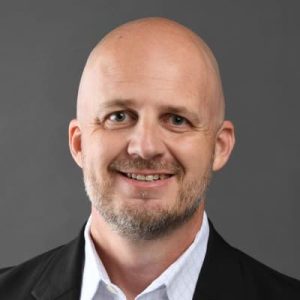
Tommy Goodwin is the President and CEO for the Exhibitions & Conferences Alliance (ECA), where he leads public policy efforts on behalf of the global events industry.
Before stepping into this role, Tommy built an impressive career over more than 20 years with organizations including Oracle, AARP, and the Project Management Institute, where he focused on public affairs, social impact, and international engagement. He also held a research fellowship at Harvard Business School and holds degrees from George Washington University, Auburn University, and King’s College London.
Tommy’s contributions haven’t gone unnoticed — he’s been recognized as a top lobbyist by The Hill for multiple years in a row and has received numerous awards for his leadership and innovation in the events industry, as well as serving on multiple advisory boards.
Marlys Arnold [00:00:00]: You're listening to the Trade Show Insights Podcast, Season 21, Episode 3. I'm your host and exhibit marketing strategist, Marlys Arnold, bringing you tools to improve your exhibit results. On today's episode, brought to you by the Exhibit Marketers Cafe, we're talking about an organization that advocates for our industry in Washington, DC, and what you can do to get involved. My guest today is Tommy Goodwin, who is the president and CEO for the Exhibitions and Conferences Alliance, or ECA, where he leads public policy efforts on behalf of the global events industry. And you're gonna hear much more about that today. Before stepping into this role, Tommy built an impressive career over more than 20 years with organizations including Oracle, AARP, and the Project Management Institute, where he focused on public affairs, social impact, and international engagement. He also held a research fellowship at Harvard Business School and holds degrees from George Washington University, Auburn University, and King's College London. Tommy's contributions have not gone unnoticed.
Marlys Arnold [00:01:48]: He's been recognized as a top lobbyist by The Hill for multiple years in a row and has received numerous awards for his leadership and innovation in the events industry, as well as serving on multiple advisory boards. So I'm really looking forward to hearing his take on the future of events and what's happening at ECA to benefit our entire industry. Welcome to Trade Show Insights, Tommy.
Tommy Goodwin [00:02:10]: Well, thank you very much, and I am just delighted to have the opportunity to chat with you today.
Marlys Arnold [00:02:14]: Well, thanks. Well, I want to start out because Possibly a lot of people haven't heard of ECA yet and aren't familiar with what it is and what it does. So if you can give us a little bit of background on what the Exhibitions and Conferences Alliance is all about.
Tommy Goodwin [00:02:30]: Well, it's the perfect opportunity to do that. We just celebrated our 5th anniversary as an association, and so ECA is designed to be the unified voice of the industry. For conversations that are taking place in Washington, D.C., state capitals nationwide, and even around the world. And so this was spurned from the pandemic. This is something that the industry recognizes that it needed a louder voice. People needed to have a better understanding of the industry, the incredible economic development that it brings, the incredible employment impact that it has, and the work that it does in communities nationwide every day of the year. And so I had the honor to lead that up on behalf of a group of 8 associations, sort of the alphabet soup of the industry from IAEE, SISO, PCMA, UFI, the whole gang. And I have the distinct honor of representing all of them and their members every day on Capitol Hill and in the White House and with federal agencies to make sure that as policy decisions are being made, the voice of wonderful folks like those who are listening to this conversation today are in the room and represented.
Marlys Arnold [00:03:43]: Well, and like you said, that is one thing that really came to light during the pandemic when we realized that we are, as it's become known, as the invisible industry where, you know, we touch every industry out there. But as an events industry, we didn't really have a voice. So this has become so important. So I think it's really— I'm excited that so many different industry associations got together and said, yes, we need to do this as, as a collective because it just, yeah, it was very painful to watch what unfolded during the pandemic when there was no, you know, it was, it was so hard because literally our industry became illegal, essentially. I mean, nobody was allowed to meet and nobody in Washington understood what was happening, what they were doing to us. During that time?
Tommy Goodwin [00:04:39]: I think one of the things that is so important when having a conversation with a policymaker, whether that's here in Washington, D.C., a local mayor, a governor, whatever the case may be, the importance of speaking with one voice is critical. Everybody getting the same message, everybody talking about the same thing. And what we have found over the lifespan of ECA so far is this is an industry with an absolutely incredible good news story to tell. There are going to be $400 billion spent on events nationwide this year. People who touch our industry employ almost 2.5 million Americans. That is a stunning number. The number that I am always taken aback by is a number that 46% of American small businesses put up a booth at a trade show at some point in the course of the year. Yeah.
Tommy Goodwin [00:05:29]: Where else are you going to find that level of scope and impact? And this isn't something that's just in one city, just in one state. This is coast to coast, border to border, 365 days a year. We've got a great story to tell.
Marlys Arnold [00:05:40]: Well, and like you said, it's not only— it not only involves like big companies, but it also involves all those little small companies, all those little startups that are the future of whatever industry that they're in. You know, like you said, so many companies, that's how they get their start. That's how they get their footing in an industry is to go to that industry's trade show. And get exposure and, and reach new customers, reach new investors, find new employees. All of those things come out of what we're doing in the events industry. And so, like you said, it's not only today's business, but it's also, you know, building that platform for future business as well.
Tommy Goodwin [00:06:19]: One of the, the dirty little secrets of Washington, DC is the town is actually run by very energetic, very caffeinated 20-somethings. The politicians you see on TV don't actually do the work. It's— they have staff to do the work for them, right? And oftentimes when I go into one of these offices and I'm meeting someone for the first time, one of my first questions is, have you been to a conference? Have you been to a trade show? And if you just think about sort of where the target audience of most trade shows is, you're going to find a lot of disconnect there.
Marlys Arnold [00:06:46]: And so you—
Tommy Goodwin [00:06:46]: okay, no, no. What is a trade show? Well, a trade show is basically— we got about 10,000 of them nationwide every year, and they're little mini episodes of Shark Tank. That happen in communities nationwide. Small businesses, entrepreneurs come to look for that one buyer, that one opportunity, that one partnership that can take their enterprise to the next level. And we do that nationwide every day of the year. We don't have Mark Cuban in his space that doesn't move anymore, but otherwise it's just an episode of Shark Tank without the cameras. And when you tell that and you make that connection for them, they start to be able to understand, oh, okay, That's what this industry is about. And then you can have a conversation about the policies that for good or for bad can impact our ability to do that the way that we know we can.
Marlys Arnold [00:07:33]: True. That's, that's a really good way to think about it. You know, put it, framing it in a perspective that they can understand. And I know one of the tools, should I say, or one of the strategies that you offer at ECA is what you call the Show Floor Advocacy Program, which I think is just genius because it does get the policymakers into our actual trade show, trade shows and events so they can actually see. Can you talk a little bit about that program, how that works?
Tommy Goodwin [00:08:03]: So I am ashamed to admit I'm still a bit of an industry neophyte. I have only been here 5 years. I didn't come from the industry. I came from the world of Washington, D.C. into the industry. So I'll be honest with you, my first few years I spent a lot of time just absorbing and learning about this industry. And this is an experiential industry. You have to touch it.
Tommy Goodwin [00:08:23]: You have to feel it. I can sit across the desk for someone or in a congressional office and have a conversation about the industry, but the magic is to experience it. And what we do with the Show Floor Program is ECA will help anyone who is trying to bring a policymaker, a member of Congress, a mayor, a governor, a city council member, whatever the case may be, to come out to an event and understand, get a little peek behind the curtain. These folks have been to conferences, they have given the welcomes, they have walked the floor at events. Throughout their careers. But have they done so with the lens of the industry to help them understand what's behind the magic that happens? I have found far too many times that there are politicians who think that a large conference or a trade show is some magical circus that comes to town. Everybody's from out of town, they're there for 3 or 4 days, they pack up the tent, they move away.
Marlys Arnold [00:09:18]: And that's pretty much the perspective most people outside the industry have, honestly.
Tommy Goodwin [00:09:23]: It is, and it over— It helps so much. And so one of my favorite things to do with the show floor program— we'll bring them to an event anytime. My favorite is I like to bring them to move-in. I like to see all the labor on the floor, all the suppliers running here and there, the forklifts, the electrical being laid, all of that. Because no matter what you might think about the people who are coming to the event, whether they're local, whether they're not, everybody on that show floor is a constituent of the politician that you're talking to. The jobs that they're watching being done are jobs in their community. The money that's being spent is being spent in their community, in their backyard. And we have done this countless times.
Tommy Goodwin [00:10:07]: And there's just a moment when we do this, particularly during move-in, you can just almost see the light bulb go off. There's the aha moment. They say, okay, this is what it is. And you're, you know, you're right. It's the, it's the invisible industry. It's the biggest industry nobody's ever heard of. But we're doing what we can from a perspective, working with policymakers, working with elected officials to make sure that it doesn't remain invisible any longer because this industry is just too gosh darn important for them not to all know about.
Marlys Arnold [00:10:37]: Yeah, and, and like you said, it's the kind of thing where they, they show up when everything is done and pretty and looks good. And, and, you know, they don't realize all of the steps that went on behind the scenes. And like you said, all of the local people that are involved, it's not just the people coming in, it's all of the people that are local. And, and have a role to play in, in making sure that that event comes off. So talk a little bit about some of the policies. You know, I know that recently ECA just came out with the 20— the list of 2026 public agenda. So tell us a little bit, and I heard you talk recently on a group about the 4 Ts. So if you can talk a little bit about those and what some of these policies are where you're really focused on educating these public officials?
Tommy Goodwin [00:11:29]: So every fall, ECA works with its member associations so that they reach out to their members and basically ask what's impacting them, what are they seeing, or what— whether positively or negatively— anything with a perspective that touches government. What's working well? What's not? Where are the pain points? And that's how every year we come together with ECA's public policy agenda. It's not something that ECA develops, we take it from our members because there is such an incredible nationwide scope to this industry. There's no way we can be everywhere, so we really do rely from a sensing and responding capability on our members, folks like you, industry leaders who are on the floor, who understand the pulse of this industry, who can help us understand if if you were to make a change here, or if you were able to get this policy changed, it could be tremendous for the industry. And so that's how we came up with our policy agenda this year and every year. And for the 2026 agenda, a lot of our agenda falls into that bucket you talked about, the 4 Ts. It's 4 different issue areas that fortunately all start with the letter T, so we've got a little shorthand for it, but it is, it's taxes, taxes, talent, tariffs, and travel. Those are the 4 overriding issues that are driving change for good or for bad within the industry.
Tommy Goodwin [00:12:54]: And if you think about taxes and talent, that's much more of a domestic story. There was a tax reform effort in Washington, DC last year that, um, nothing harmful to the industry was done as part of it. We were able to pass some wonderful workforce development legislation that will help get new talent into our industry. And so that's a very good news story, and it's something that ECA wants to continue to focus on. Now, if I look at those other T's and I think about tariffs and I think about international travel, that's a very different conversation. The uncertainty, the sentiment of people not wanting to come to America for events from abroad, some of the travel restrictions, the barriers that we're putting in place for both goods and people to come to America as part of our wonderful event ecosystem. Well, that's a situation that obviously has created tremendous headwinds for the industry. So we always sort of keep an eye on the external environment because those taxes, those talent issues, the tariffs and international travel really have been driving so much change within the industry over the last year, year and a half.
Marlys Arnold [00:14:01]: So what— when you talk about these public policy issues, what are What are the actual action steps that you're taking? I mean, I know you are very well connected in Washington, D.C., and you're, you're meeting with these legislators and you're, and, and policymakers and things, but what, what are some of the other things? What, like, what are some of the goals of ECA in these interactions?
Tommy Goodwin [00:14:29]: So when we think about those issues in particular, we're really focused on two things. We're focused on increasing awareness of the industry both overall within this audience, but also in a way that they bring that lens to their deliberations, whether they're introducing a piece of legislation, whether they've got a say on a particular regulation. We want them to keep the trade show and events industry top of mind. Because when you look at these issues through that funnel, you get a very, very different perspective than you do without it. And so we're always trying to do that, but we are really laser-focused on policy change. We want to— it's not enough to let them know, it's not enough to be visible. We want the results. So last year when we were successful at getting the Pell Grant program expanded to covered skilled workforce training and getting people on the show floor for the first time, that is really the example of what we're trying to do.
Tommy Goodwin [00:15:20]: On the tariff side, we're testifying for the US Trade Representative. We are working on getting our allies on Capitol Hill focused on the administration to make sure that they're not introducing new tariffs that are going to add even more uncertainty to the international environment. So we're really looking at really moving the needle. Just flagging these for folks isn't enough. We want to make sure that we are really driving change and something that people on the show floor see, because if not, then we're just talking at an academic level about different issues.
Marlys Arnold [00:15:53]: Well, and it's kind of going back to the old saying that, you know, don't just come to me with a problem, come to me with a proposed solution. So, you know, you're, you're reaching out to them, not just to educate them, but you're actually saying, here's where we see things could be improved or how might, you know, what steps might be taken to improve.
Tommy Goodwin [00:16:13]: No, that's right. And what we find within the 4Ts and within some of our other issues like sustainability is there are different parts of government that have different control levers. So when we were talking taxes and talent last year, that falls directly within the range of Congress. Congress. And so we're able to be on Capitol Hill. We're able to bring industry leaders and advocates up to Capitol Hill and have those conversations in a more traditional sort of, I always say, the Schoolhouse Rocks, I'm just a bill type of framework. When we talk about tariffs and international travel policy, those are authorities that Congress has delegated to the executive branch over the time. So we're really talking about President Trump.
Tommy Goodwin [00:16:52]: We're really talking about cabinet secretaries and the people that work for them. And that's just a different form of advocacy. There are different ways We're trying to cast a very wide net on Capitol Hill. Sometimes to create the kind of change we're looking for, we're really looking to target just one person and we're trying to find how many different ways can we get to that person and impact them in a way that they understand, okay, this is what we need to do to make this industry thrive.
Marlys Arnold [00:17:18]: Right, right. That makes a lot of sense. Well, there's actually a day coming up, one specific day that is really important. So tell us a little bit about that.
Tommy Goodwin [00:17:29]: It is a day called ECA Legislative Action Day, and it is, for lack of a better term, it is my Super Bowl. It is one of my favorite days of the year. It is a day where we bring industry leaders and advocates from across the U.S. and even from around the world to Capitol Hill. We schedule meetings for you to go have conversations with your elected officials, because it's one thing when I have a conversation with a member of Congress, it's a completely different thing when you who pulls the lever gets to determine whether they come back every 2 to 6 years, has a conversation with a member of Congress, has a little bit of a different impact. And we fan out across Capitol Hill and we have a day of incredible advocacy where folks from states across the country get to talk about the issues, share their perspective, share their story, and really help these elected officials understand at a granular dirt-under-the-fingernails level impact in the community. This is what it means when the trade show industry thrives. And last year we were blessed to have 170 different folks from the industry from 30 different states and 3 countries come to Capitol Hill in Washington, D.C.
Tommy Goodwin [00:18:40]: We met with nearly 150 congressional offices in one day.
Marlys Arnold [00:18:44]: Wow.
Tommy Goodwin [00:18:44]: It is amazing. This year, as we're sitting here, we've already got 150 folks joining us. So we're going to have the industry's biggest gathering on Capitol Hill ever. And it is just such a fantastic opportunity for folks who are listening to this conversation, for leaders across the industry to come and talk about the work that they do every day. Because it is— I, again, as a neophyte to the industry, I am just— I walk onto a show floor and I am constantly just amazed by what I see and with the magic that it takes and the incredible amount of labor and talent and small business acumen and logistics and coordination. It is just something that when you tell these folks, they respond to it so incredibly, and it helps really bring the lens of the industry to the policymaking process. So if you're listening to this conversation right now, it is Thursday, May 28th. It is the day— it's the Thursday after Memorial Day.
Tommy Goodwin [00:19:43]: It is— we like to bring folks to DC before the weather goes too bad for the summer, and it's, you know, 100 degrees, uh, 20 degrees outside with 100 and humidity. It's still a nice time to visit DC, but it is really an unparalleled day of both advocacy and an incredible cross-industry networking opportunity. This is because of who we represent. We represent the show organizers, the meeting strategists, the venues, the stand builders, the contractors. We bring groups of people from across the industry together that don't often have that chance to connect. And so yes, we're there for a very worthy cause. We're there to advocate for the industry, but there are some connections that are made during those events in what is really just an incredible environment. You're walking the halls of Capitol Hill for the day.
Tommy Goodwin [00:20:31]: You are a participant in this amazing democratic process that we're celebrating 250 years of this year. And it is really— I encourage everybody who comes to Legislative Action Day at some point in time during the day, just zone out, let your eyes go a little bit heavy, take a step back and just realize you are part of one of the most incredible things you will ever do on that day. You know, there's a— there's the First Amendment says, you know, you have the constitutional right to petition your government for the redress of grievances. Well, that is exactly what LCA Legislative Action Day does, but we make it as easy as possible. We lay it out, we do trainings and everything ahead of time so that if you've never been before, you will feel comfortable during that first meeting and you'll feel like a pro by the end of the day. Make sure you come back the year after.
Marlys Arnold [00:21:15]: Well, that was one of my questions because I'm sure some of the people listening would be like, well, I don't have any idea how to do that kind of outreach and approach. And so it's good to know that there's lots of training involved and nobody has to just be thrown into the deep end on this. So, and we'll have a link in the show notes as well. So check that out for how to learn more about, and if you happen to be listening to this this in the archives down the road and May 28th has already passed, go to ECA's website because there'll be information. This is something that happens every year in May, so if you miss it this year, start planning for it in future years to get involved in, in this process. So what advice would you give to emerging leaders in the industry? How can they really get involved and, and really, you know, help to move all of these policies and strategies forward?
Tommy Goodwin [00:22:08]: Well, every leader, every individual in the industry is welcome at ECA. We need everybody's voice. This is something that we do collectively, and all of us are significantly stronger together than all of us individually. So we have something we have called the ECA Advocacy Network. If you go to our website, it's ecadvocacy.org, uh, you see the Action Network there. And what it does is for those who can't come to Legislative Action Day, or for those who do come to Legislative Action Day but want to get involved and stay involved year round, we have tons of different ways for that to happen. You mentioned the Show Floor Program earlier that we love. We have another program called the Social Influencer Program.
Tommy Goodwin [00:22:51]: So much of the political conversation these days is driven online. We won't talk about whether that's a good thing or not, but it is. And so ECA and folks who are active on social media have an opportunity to share information about the priorities of the industry, tag their policymakers, and participate in the conversation there. We've got setups where you can email your member of Congress with just a few clicks, whether you're in the office, whether you're at home, whether in your phone, or whether you're actually even on the show floor. We can get you involved that way. We can help you with writing op-eds or letters to the editor of your local media outlet. We've got different ways that, you know, however much time, however much energy, however much talent you would like to contribute to the advocacy mission of the industry, go to ecaadvocacy.org and we will absolutely find a home for you to do that because your voice is so incredibly critical in this space.
Marlys Arnold [00:23:43]: I love that. You know, like you said, there's so many ways to get involved. You don't have to just go to Washington. There are so many other ways to get involved to be a voice for this industry. So Tommy, thank you so much for coming today to Trade Show Insights and giving us a lot of behind-the-scenes ideas of what's going on, what's being done for our industry, how you and your cohorts are really making a difference, and how we all, like you said, how we all can have a voice in where the future of this industry goes. So any final thoughts, Tommy?
Tommy Goodwin [00:24:16]: I just thank you very much for the opportunity, your generosity in lending us your platform to get the word out. Is incredible. And if you are listening to this conversation, I would just encourage you to get involved with ECA and for the industry's advocacy work because, you know, what happens in Washington, D.C., I think right now has never been more impactful on the industry than it is right now. And I don't see that changing in the near future. So when you're thinking about what the future of the industry is and the direction the industry is going, we need to be in Washington, D.C., shaping that, and you can be part of that journey. So We invite you and we welcome your advocacy.
Marlys Arnold [00:24:53]: All right. Thank you very much. And everybody listening, go out there and get involved and have a say. If you enjoyed today's episode and would like more, you can subscribe to the Trade Show Insights podcast and automatically receive future episodes on your chosen device. Simply search for Trade Show Insights in Apple, Spotify, or virtually anywhere else that podcasts are found, then click the subscribe button. Trade Show Insights is protected by the Creative Commons copyright license. You may feel free to share this recording with colleagues or embed it on your own blog as long as it is shared in its entirety and is not used for commercial purposes. To learn more, please see the link in the sidebar of the show notes at tradeshowinsights.com.
Marlys Arnold [00:25:51]: Well, that's it for this episode of Trade Show Insights. Be sure to check out our show notes and archives at tradeshowinsights.com. You can also connect with me using the social media links or the contact page on the site. I'm Marlys Arnold. Thanks for listening, and be sure to join us next time for more tools to improve your exhibit results.
Sign up to receive email updates
Enter your name and email address below and I'll send you periodic updates about the podcast.

