

Ever thought about what trade show marketers could learn from reality TV?
How is pitching abstract concepts to studio execs like promoting intangible services on the show floor?
I invited an Emmy-Award winning media advisor and visibility strategist to answer those questions and more.
Drawing from decades of experience developing iconic TV franchises, Vinnie Potestivo shares valuable lessons for exhibit marketers.
Whether you need to sell an idea, inspire your team, or amplify your own visibility, Vinnie offers practical strategies and unique perspectives from the world of reality TV, like how to:
-
Build relationships for long-term success
-
Showcase intangible ideas with creativity
-
Speak in your audience’s language
-
Be a trendspotter vs a trendsetter
-
Create context, not just content
Prepare for a wealth of backstage wisdom to help you turn an expense-generating department into a revenue-generating collaboration!
Here are the links mentioned during the interview:
- VPEtalent – Vinnie’s website
- Vinnie’s podcast, I Have A Podcast®
- I Have a Podcast® newsletter on LinkedIn
- Vinnie’s bio on IMDB
- Connect with Vinnie Potestivo on LinkedIn
- More perspective from Vinnie on the importance of collaborations
- Follow Judi Fox on LinkedIn
About Vinnie Potestivo
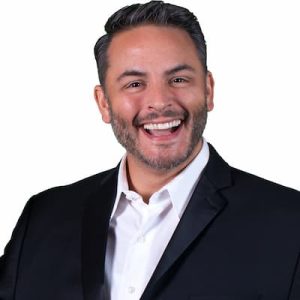
Vinnie Potestivo is an Emmy Award-winning media advisor and visibility strategist who helps entrepreneurs, creators, and business leaders break through the noise with strategies that spark recognition and open new opportunities.
He’s spent over 30 years shaping the media industry, developing award-winning talent, and helping brands amplify their authority through strategic visibility.
His media journey began in 1993 at Staten Island Community Television … then later he joined Viacom to launch MTV’s first-ever talent development department, where he played a key role in shaping the careers of … Mandy Moore, Ashton Kutcher, Nick Cannon, Beyoncé, and more. With shows like Punk’d and The Osbournes, he helped craft iconic TV franchises that continue to influence entertainment today.
Now as the founder of VPEtalent and host of I Have A Podcast®, Vinnie continues to help clients (both people and brands) leverage their media exposure to build influence and make an impact.
Marlys Arnold [00:00:00]: You're listening to the Trade Show Insights Podcast, Season 21, Episode 2. I'm your host and exhibit marketing strategist, Marlys Arnold, bringing you tools to improve your exhibit results. On today's episode, brought to you by the Exhibit Marketers Café, we've got a treasure trove of ideas for exhibit marketers from inside the world of reality TV. I am excited to introduce my guest to you today. I'm going to give him a formal introduction here in just a minute, but I first met Vinnie during the pandemic, and, uh, he and Judi Fox— if you haven't— if you haven't heard of Judi, you need to follow her online. She's a great, uh, social media and LinkedIn expert. But Vinnie and Judi were hosting LinkedIn audio sessions And I mean, we would have like marathon sessions sometimes of like 2 hours plus and talking about, you know, how to get better visibility and how to really utilize LinkedIn and all of these great things. But I got to know Vinnie and he just— he's really smart, really creative, and just a really genuine, great human being.
Marlys Arnold [00:01:48]: Um, as another one of my former guests, Alicia Barr, said, said about Vinnie, you make every human feel important because they are. I think that's a really good way to sum up what Vinnie is all about. But now I'm going to give him a formal introduction. Vinnie Potestivo is an Emmy Award-winning media advisor and visibility strategist who helps entrepreneurs, creators, and business leaders break through the noise with strategies that spark recognition and open new opportunities. He spent over 30 years shaping the media industry, developing award-winning talent, and helping brands amplify their authority. His media journey began in 1993 at Staten Island Community Television, then later joined Viacom to launch MTV's first-ever talent development department, where he played a key role in shaping the careers of, um ... just a few people you might have heard of, like Mandy Moore, Ashton Kutcher, Nick Cannon, Beyoncé, and more. With shows like Punk'd and The Osbournes, he helped craft iconic TV franchises that continue to influence entertainment today. Now, as the founder of VPE Talent and host of I Have a Podcast, Vinnie continues to help clients, both people and brands, leverage their media exposure to build influence and make an impact.
Marlys Arnold [00:03:13]: Welcome to Trade Show Insights, Vinnie.
Vinnie Potestivo [00:03:16]: Oh, it's so nice to be here. By the way, 30 years in media, it took me 25 to give myself my first show. I have a podcast so I can finally show up as myself. So like hearing those names that you rattled off, um, and knowing that those are touchpoints that a lot of people will be familiar with, it was an honor to get to work with those people who, who needed to pass through MTV at an era where television truly mattered because it was in sync with a lot of community and culture because of time, as opposed to where we are now in social media and the algorithms and the amount of competition for spaces. So thank you for having me. And I just, just gotta— I just gotta acknowledge, 25 years to give myself a show like that? Sheesh, how much longer am I gonna wait? So I'm glad I finally did when I took it there. And that's, that's what I have a podcast all about. It's just my show, my show, my friends, my people, my energy.
Vinnie Potestivo [00:04:08]: That's what I wanted.
Marlys Arnold [00:04:09]: Well, and I love that, that you finally have come from, you know, basically back of house to front of house.
Vinnie Potestivo [00:04:15]: Yeah, yeah. And with permission, I mean, I've talked to a lot of people that, that I helped to get in front of the camera about this very— about, you know, I'm comfortable being behind the mic, and I'm also comfortable showing up on your show, Marlys, because You have final total edit control over what makes the picture. I've been in the room where I'm an executive producer and even I don't have say in what makes the final cut. That TV scares me, you know, with what, what their goals are and what they're really out to do. It scares me, but I do trust independent podcasters and the way we show up for each other in such a beautiful way. So like, so yes, 25 years took me long enough, but also took us long enough to finally have our own series where we could like show up and do this. I've— I'm having a blast. And also those clients and those people that you talked about, they're having a blast owning their own content, not selling it to MTV, not selling the— imagine being an Osbourne and selling the Osbournes to MTV and then not owning the Osbournes.
Vinnie Potestivo [00:05:16]: I'll tell you who learned quickly on that one, the Kardashians, which is why they called it Keeping Up with the Kardashians, so you could never own the Kardashians. That was by design. Kris is so brilliant and smart about that.
Marlys Arnold [00:05:27]: So Well, I want to start out— I want to, I want to get to the, the media side and like building your media profile here in a little bit, but I want to back up a little bit and talk about— because one of the things you were doing when you were at MTV, you were having to pitch, and I've heard your story on this about how you had to pitch these, you know, very abstract ideas. You know, these were concepts, these were not, you know, there was nothing concrete and you were going into a really um, what I want to say, uh, uncharted waters with a lot of these TV show ideas. And one of the things I hear a lot from exhibitors when they're exhibiting at a show is, well, you know, I don't sell a product, I sell a service, or I sell, you know, something that's intangible. How in the world do I promote that? How can I — you know, I don't have tools or furniture or something that I could display in my booth. How do I go about selling something that's intangible? So So give us some insights on that.
Vinnie Potestivo [00:06:27]: Oh yeah, there's a big difference between — there's a big difference between showing up to a network pitch with a great pitch deck versus showing up to a network pitch as an executive who was one of the first people to create some of the first ever Emmy Award-winning series in our vertical. Um, and that ownership that I got to step into of being myself, right? I didn't have experience. No one had experience being in unscripted programming the way that people ultimately did at MTV. Let's say — say that. But I didn't focus on my experience, I focused on being the experience. I focused on — so my job was not to go find the talent, my job was to support the casting team. Eventually I learned how to interview, and eventually I learned how to edit and create all the things that the executives needed to see. I had some strong technical skills, um, I could, I could edit two tapes because I knew how to wire VCRs together.
Vinnie Potestivo [00:07:25]: I knew how to manage a large group of people because I was really strong at building databases. I was one of the first people at MTV to say, give me a Rolodex and I'll put it in your, in your inbox so you have there, you know, we can search digitally for information. People kind of looking at me scratching their heads being like, how are you going to get 20 itineraries out for all the different talent on MTV Spring Break? And I'm like, what, you don't understand, you don't understand how Excel or, um, uh, uh, what was the Microsoft— it starts with an A. What was their database product called? Oh, it starts with an A.
Marlys Arnold [00:08:01]: Was it Access?
Vinnie Potestivo [00:08:01]: Yeah, Access. Yeah, my accent from Staten Island calls it Access, like, as opposed to excess. Yes. Yeah, Microsoft Access. Like, that changed my life. Um, look, you gotta speak their language. Not something I knew how to do at first, so I had to learn the language of the room so that I wasn't teaching them new words. I was using words that they were already familiar with.
Marlys Arnold [00:08:24]: Mm-hmm.
Vinnie Potestivo [00:08:24]: Because when you start introducing new words in the vocabulary, it's hard to get the point across. And if I can use the words that they're already accustomed to, then I can expand on what they're, you know, what they already know. But there is a big difference, you know, from showing up in my authority as the experience versus needing to have experience and needing to prove the show. Especially in the late '90s and early 2000s, because those show— those titles change, the creative changes. Even Real World, when, when, when, when Bionna Murray came and pitched The Real World to MTV originally, when they shot it, cast it, and, and, and went into edit— so after everything has already been recorded, the original conceit of that show was 7 creatives moving to New York. What is it like to be a creative in New York? Because if you look at that original cast, there's a dancer, a rapper, a spoken word poet, um, a singer. They're all type of— they're all certain types of performers, right? And what MTV realized only in the focus groups after it was already edited and shot, that more people related to 7 strangers in a house than 7 creatives in a house. Oh yeah, the show changed, but it changed after season 1 was already recorded, and that's — that change stuck, right? It was always 7 strangers trapped in a — I say trapped in a house, I think they might use different language.
Vinnie Potestivo [00:09:54]: I think the real worlders — my cast members will 100% me on the feel trapped in a house part, but let's just say picked to live in a house. Yeah, but then also it was picked to create dissidence and picked to create, you know, conversation and, and dissonance and, and dialogue. And, and sometimes that was felt very, um, ill-constructed. So that's why I say, you know, trap to be in the house. But, but to pitch a show that no one knows and no one has an understanding of, you got to go slow, you got to make it their idea, you got to use their word. Like, I learned this from Big Fat Greek Wedding— make it, make it his idea, and then you're 100%— it's a go. If it's their idea, oh my gosh, Do you want to be the first person to cast Mandy Moore on television? She's going to be a star, right? Yeah. Okay.
Vinnie Potestivo [00:10:39]: So do we want MTV to get credit for her to be a star? Because if not, then maybe E! is going to get credit, or Nickelodeon. Do you want Nickelodeon to come in and get credit for it? You know, so there's a little bit of fear tactics that start coming into play as well.
Marlys Arnold [00:10:53]: Yeah. Well, and I like how you said you've got to really think about what's going on in, in their heads, the people that you're, you're pitching to, that you're, you're talking to, you know. So it's obviously, it's going to be be a different way that you frame something if you're pitching it internally within your own company. And I think a lot of times with, with a, uh, exhibit marketer, they've got, you know, maybe they're in the marketing department, but they've got to deal with the sales department, they got to deal with the people that write the checks that actually pay for them to go to the shows. So they've got all these internal customers that they're pitching ideas to and, and selling them on concepts of why they should be going to the show and what they need to be doing while they're at the show. But then they've also got the external customers while they're at the show, the people coming to their booth. So they've got to have a way that they can be communicating in a way that is, um, like you said, that is relatable to both of these different audiences. So, and, and you did this as well because you talked about how you were pitching concepts to the execs at the TV station, but you were also, as you said, crafting a way that you could communicate what this show is all about to the actual general population that would be watching it.
Vinnie Potestivo [00:12:04]: So yeah, I was socializing it. I was socializing— I would call it socializing. I would socialize ideas internally and externally. When Sharon pitched us the Osbournes, oh, it's the Osbournes meets the real world. And then MTV was like, we're not a nostalgia network. No one cares about Ozzy Osbourne's family. And we're like, it's not about Ozzy Osbourne's family. It's about— actually, it's about the kids more than anything.
Vinnie Potestivo [00:12:25]: Well, we don't have shows about kids, and we don't have shows about famous parents that are no longer famous anymore and their kids either. But we did have a show called Cribs. And they did live in a beautiful home. So we did— in our department is we booked Kelly and Jack on Cribs. We got them to air in Cribs. So now I'm taking network-funded, network-owned content. It's the network's idea. Now I'm gonna take that segment out from Cribs, cut it down, and then show you a really condensed version of why I think this might really work.
Vinnie Potestivo [00:12:57]: And, and by the way, I think if we— I remember if it was pitched this way in the room and if you don't think that this is the craziest house on the block, then you lived in the crazy house on the block. So you're either their neighbor or— because it was about relating to them. Um, to be honest, there's this one DVD set I got as a kid, um, with The Muppet Show, and it's Jim Henson pitching The Muppets to the executives, and it's literally The Muppets in a boardroom being people. And it wasn't until he put Muppets in a people position, not Muppets in a Muppet position, that people understand, "Oh, you know what? I'm not looking at a Muppet. I really— this, this sock thing really is pitching me, and they're using all my words, my terminology, all the social and cultural references." So that's, that's sometimes where I have to, you know, go around and understand, like, what, what language, what vocabulary are we dealing with. Even they would say, oh, well, they're not really famous. They don't have a Wikipedia page. Well, there's a reason why I'm a wiki author, by the way, because I would go in and I would create the wiki pages for people that didn't have them.
Vinnie Potestivo [00:14:04]: And then I was like, look, now, now, how about that?
Marlys Arnold [00:14:11]: I love it. I love it. Well, and it does take a lot of creativity sometimes of like, you know, it's not like you said, it's not just creating this really slick pitch deck and, and showing it's like, okay, you know, here's all the pretty pictures in the, the perfect outline and everything. Sometimes you had to get really creative, and I like how you talked about, you know, they weren't open to the idea of the Osbornes as a show until you brought Kelly and Jack in to an existing show and then kind of showed how, hey, we can, you know, here's how this would work, and then we could spin off from this. And, you know, so I think a lot of times it takes that, um, very unorthodox approach to things. And I think that's one thing that it's always been hard for me. I, I've, you know, pretty much been an entrepreneur my whole life because, you know, it's hard for me in that corporate environment. I've tried it a couple times, but it's like, it's really difficult to convince the higher-ups sometimes that, you know, they had— they're like, oh well, we, you know, we know better, you know, we're— we've been here longer, all that kind of stuff.
Marlys Arnold [00:15:20]: But it's like, if you really have this vision and you really see something that could benefit the organization that would really— like, you— I mean, my goodness, The Osbournes is probably one of the most classic enduring shows that you worked on. I mean, you know, we still— you know, I watched a clip just, just the other day when I was getting ready, preparing for this interview. I watched a clip of you from behind the scenes with The Osbournes and thinking about, you know, yeah, Ozzy might not have been a household name at the time, but he sure is now. After the show. So, you know, you had this long-range vision. So talk a little bit about how do you— you know, you've got this passion. How do you really communicate that passion and the possibilities? And this kind of leads into your media training that you do as well, is like, how do we as individuals, whether it be within a company or relating to our customers or whatever, how do we really build that profile of ourselves as a visionary and as a leader?
Vinnie Potestivo [00:16:25]: Oh, it's a brilliant question, um, because you don't get paid for being a visionary, you get paid for having the vision. Yeah, which is past tense. Um, something I learned even in media booking is like, uh, trend spotters are more likely to get booked on a, on a local news segment because they can spot the trends. Trendsetters We're heady, we're talking about things that don't even exist yet. What do you mean kids running— kids having their own show? What are you even talking about? You know what I mean? It suddenly becomes about that because the construct is so strong and everyone's coming at it with such a different construct. Um, for me, there's a power in déjà vu. Um, if I can literally make you think this is your idea or that you already had this thought, it's just now it's coming back. I would sometimes even do like— I would— I mean, I'm, I'm kind of a— I'm silly.
Vinnie Potestivo [00:17:19]: I'm the ex— I'm, I'm such an example of be the experience. Don't focus on how much experience you have, right? I'm not focused on how many wins and losses I have. Everyone I've ever worked with will tell you the same thing about me. You know, I have good days, bad days. I'm a very personal person. Um, I value show friendship over show business. There's a reason why my show friends got the ridiculous deals that they got from MTV. Wasn't my money.
Vinnie Potestivo [00:17:46]: But I'm happy to give it to my friends.
Vinnie Potestivo [00:17:48]: Are you kidding me?
Vinnie Potestivo [00:17:48]: It's not my money. And I'm bringing in— I was supposed to have a— casting is supposed to be an expense to the network. We turned an expense unit at MTV into a profit generating unit. It's like, I went from being, you know, X hundred thousand dollars expense to MTV to bringing in hundreds of millions of dollars because of the projects we were bringing in. I listened, I created space when no one else created space. All these artists were— everyone we just talked about was already coming through MTV, just no one was allowed to talk to them and say, hey, what are your ideas? What, what can we do together in union? But I would say it's not what I did that made me successful, it's who I did it with. And I was very generous with who I aligned myself with, even as you— even in the beginning of this, you know, bringing up Judy and some of the people that I've been so lucky to work closely with. I value more that I'm seen in a friendship with these people than that my credits and my Emmys and my filmography or whatever it is made me the right person because of my resume.
Vinnie Potestivo [00:18:55]: If my resume is the only thing that makes me right for this, then like, then it's not right for me because my resume is built on other people's names. But if I can be there as a friend and treat you as a family member, you know, and it truly— I truly mean that, that, that's my MO. That's the experience I tried to— not try, that's the experience. It's the only experience I knew how to be myself. So that's what you got.
Marlys Arnold [00:19:18]: Well, and I've heard some of these people what they say about you. I mean, they really view you as being someone that they, that they felt like they could turn to that was really in their corner, that was a friend. You know, you weren't just the guy at MTV. So I think that, that's a key in and of itself, is, you know, building those relationships. It's not just about, hey, you know, I'm gonna— especially, you know, when you're on the trade show floor, uh, I know for me personally, you know, I, I'm, I'm in a booth, I'm meeting people, but sometimes it's like, it's all about that connection. Even if you're not selling something to them right in that moment You never know down the road, especially, you know, in the trade show world, like in the entertainment world, people change jobs and companies and, you know, so you never know where that person's going to land 2, 5, 10 years from now and how it may come back around. Like you said, that whole déjà vu moment, you know, maybe the time wasn't right to work with you at that moment in time when they met you, but down the road, you know, I remember one time I had done this whole, you know, sequential postcard campaign where I sent out multiple postcards to all these different trade show organizers talking about, you know, what I had to offer and how I could work with them in their show. I had somebody that contacted me like 2 years later and she's like, oh, I just came across this postcard on my desk and I was just wondering, do you still offer this? I'd like to talk to you.
Marlys Arnold [00:20:44]: You know, I mean, how, how many people give up in that amount of time and say, oh well, forget it, this is not working. But you build that relationship. It's that long-term having that vision of you know, building that relationship with this person. And a lot of these people that I mentioned, I'm sure you've crossed paths with them multiple times throughout their careers.
Vinnie Potestivo [00:21:04]: Yeah, but even, even looking at— yeah, yes. And looking at trade shows too, as a great example, um, I don't only show up when I'm behind the booth. I equally love being in the audience of the people that I've gotten to work with. And I think that also speaks volumes, especially for the audience that's watching this. Like, I, I know so many casting directors who are tied to specific projects. Oh, here comes so-and-so, must be a cooking show. Here comes so-and-so, must be a competition show. Well, hopefully back in my casting day, when I walked into the room was, here comes Vinnie, and like, buckle your seatbelt, because if he's in the room, something, something big.
Vinnie Potestivo [00:21:43]: Talent would tell me this. Yeah, they would— after— I didn't realize the reputation I had amongst the talent community. Because once you know what you know, then it becomes about, oh, why is Vinnie here? Like, who's getting replaced? What's— something's not good if Vinnie's on set. And I was like, y'all, I'm here because my sister is sitting in the front row and I want to make sure she gets on camera. It's like, I'll be very honest, that's— but again, my family grew up at MTV, you know, with me as well. But I didn't only show up when I had something to cast. I didn't also lead my conversations with my peers by telling them what I was casting. There was an understanding that I was working on a lot of casting projects.
Vinnie Potestivo [00:22:22]: I, I never felt like, "Oh, here's Vinnie. Vinnie, what are you working on next?" And whatever I was about to say was going to qualify me for being in the room. Um, because I'm very sensitive about the rooms that I bring opportunities into. Um, in casting, be careful where you look because you're gonna find it. So be careful, especially all my single friends out there. You be careful where you look. If you're looking for someone, because if you don't want, you know, someone who stays out late partying at— to wee hours of the night, stop looking at the nightclubs, you know? So, yeah, be careful where you look, be careful what rooms you bring those opportunities into. And then the thing that I think I did well at MTV was, you know, you don't cast Beyoncé and Mandy Moore and Christina Milian and Nick Cannon and all the people I got to work with by searching for them.
Vinnie Potestivo [00:23:05]: You stand still. I stayed at 1515 Broadway in Times Square for 10 years. I also was in the West Coast version of MTV as well, but I stayed put for 10 years. I was not always working for MTV or MTV2 or MTV3 or MTV Films or all the different types of MTV.com, so everything they did with different projects, different skins, different platforms, modalities, projects. But I created a report for MTV, so I didn't have to worry about what I was working on. I could just come up with a report to say, here are 5 artists I think that are going to break, here are 5 comedians that I think are going to break, here are 5 actors that I think are going to break. Some of this is based on box office news, some of this is based on me having direct conversations with labels and understanding what their priorities are and where their budgets are actually going. Some of it was in talking to Coca-Cola and Nintendo and Disney and understanding who what campaigns they're about to support and what artists are gonna be involved in that.
Vinnie Potestivo [00:24:05]: So that first report is something that I used as like a through gate so that I— it was no longer about what projects am I working on, but so that you could understand the value that I was bringing to the network.
Marlys Arnold [00:24:15]: So it was back to that being a trend watcher again, trend watcher, and, and reporting on the trends rather than trying to be the trendsetter. You were like showing them, if I
Vinnie Potestivo [00:24:25]: can be the trend spotter, You'll know what's happening because you can— you— because your kids are talking about it. You'll understand what I mean by so-and-so artist is going to be great. But if your kids don't know and you have no clue who this artist is, you're like, Vin, I don't, I don't, I don't understand. The other thing I did was I put into action— our department put on— no one asked us to do it, but well, my boss asked us to do it, but other than him, no one asked us to put on a talent showcase. And I'll never forget being like, why are we putting on a talent showcase? For literally every single Viacom employee. If they don't say yes, we're going to lose that talent to somebody else. And he was like, that's why we're doing it, because we're going to go tell everybody at MTV that these are the next 20 stars. And if they don't want to do shows with these next 20 stars, then we can say, well, BET's gonna get them, VH1's gonna get them, MuchMusic is again— AOL Music is gonna, you know, AOL, um, you don't wanna— all of a sudden now we're getting, you know, we're taking it to the gut.
Vinnie Potestivo [00:25:24]: But like, but I start, I start using that internally. I'm socializing why these talents have— are so important to us. Externally, I'm socializing to Sony and Columbia and all the labels, hey, my department puts together a mix CD and a paper document that gets delivered to every single executive at MTV. No one else is doing that at MTV. So now they're calling me telling me, "Hey Vin, we've got this new artist." "Well, they're coming out with an album next week." Not soon enough. What about when they signed a deal? How come I can't follow an artist when they signed a deal? Because you only tell me who's about to hit MTV. So how do I do a show about an artist when they sign their deal? That's how I got Ashlee Simpson's show greenlit because we were able to follow from scratch and we knew the level of support she was going to get. It was, yes, something to do with Jessica's— Jessica's being famous sister and having a famous sibling on the network certainly helped advertisers take the leap to trust.
Vinnie Potestivo [00:26:21]: But Ashley has more number one— Ashley's a strong songwriter. She has, she has more number one hits than Jessica has more hits, but Ashley has more number one hits than Jessica does. Just— Ashley was quite an artist.
Marlys Arnold [00:26:33]: Well, that actually goes back to what you were talking about earlier about it's about building those relationships. You built the relationships with the studio execs And, or the label execs. So that way they started to trust you and knew as somebody, somebody new was coming up, then they're like, oh, we need to let Vinnie know.
Vinnie Potestivo [00:26:51]: So again, so I'm sorry, MTV had a show called, uh, Diary. You think you know, but you have no idea. Diary. This is the life of Britney Spears. But what would happen is the only way we would produce a di— an episode of Diary is if a film studio paid for the entire episode. And the entire episode was usually around the launch or the red carpet of a movie. So usually, oh yeah, it was a $300,000 buy for an episode that promoted a movie. Um, and, and you can go through that path and pay $300,000, $400,000 to get a series on air.
Vinnie Potestivo [00:27:28]: Or you can tell me who your two biggest stars are and I'm gonna get them we— woven into the fabric of pop culture, not just a one-off, but in an actual series where you can see them repetitively over and over again. And I'll get the— I'll get them on air before that special gets on air because I have a live show called TRL every single day. So it was very easy for me to put people on TV the day of and start that journey, um, if they were prepared and trained. But it was also my job to make sure they were prepared, i.e., Wikipedia and trains, which is something I did, you know, after, you know, I, I worked with all the on-air talent, um, to make sure they were comfortable being themselves on camera. That's literally was my approach.
Marlys Arnold [00:28:10]: Yeah.
Vinnie Potestivo [00:28:11]: But there's all those other— see, all those things, teaching people how to be on camera, reports, showcases, not part of my job construct. That's part of my reputation, being a leader and wanting people to come to me and me figuring out a way to differentiate myself amongst the— by the way, there's no shortage of creatives in that building at MTV.
Marlys Arnold [00:28:30]: So like, right, right. Well, and I love how you talk about that. It's like, it's all these things that weren't technically in your job description, but yet they really made you stand out. Um, one of the, one of the quotes that I've heard you say is create context, not content. And I think that you've talked a lot about that, how you did that within your career, but also And I know we're kind of short on time here, but talking just a little bit about the other side of what you actually do now is helping people with their, their, uh, what do we want to say, their media exposure, their media platform positioning.
Vinnie Potestivo [00:29:08]: Really positioning. Yeah, right. So what we don't need is more content. What we need is more positioning.
Marlys Arnold [00:29:13]: Exactly.
Vinnie Potestivo [00:29:13]: That's for sure, because the algorithms are picking up on the content, and then the algorithms dictate sometimes what your positioning is.
Marlys Arnold [00:29:20]: Well, and the content anymore, it's like, you know, everybody keeps talking about AI slop. Yeah, well, you know, more content is not necessarily better, and I actually am taking that approach. I did one of those, um, LinkedIn evaluation, you know, AI evaluations at the end of last year, and it basically told me, hey, you've created a ton of content, you know, 200 and— I don't know, 231 posts last year or something. But they're like, you need to like drill down and say more when you say something rather than more overall. And so that's why I'm really trying to do this year of like really drilling down and not posting every single day on LinkedIn, but, but posting things that are more meaningful. So talk a little bit more about the idea of context, not content.
Vinnie Potestivo [00:30:07]: Yeah, well, the whole— I mean, let's just go back to that talent, you know, the talent strategy. What I didn't wait to do is put a casting tape of 5 people in front of you and say, here are the 5 people you should pick. What I did was create a document that says the 25 emerging artists for Q1 2006. Now that's so your next big star. Like, I would really lean into, like, the pop culture zeitgeist of what's happening.
Marlys Arnold [00:30:31]: Yeah.
Vinnie Potestivo [00:30:32]: So that people can put into content— here's the next 5 stars that will be on the next 5 months of Seventeen magazine or YM magazine. Like, I really went there with pop culture. To make sure people understood what was happening. So that's, that's what I mean by context over content. I'm not just waiting to show up with a piece of language or verbiage or a project. I really want there to be some context around it. Uh, the context for me also is like how I'm introduced in the room before I get there. You mentioned in the beginning of this episode, it's almost hard to talk about me as a solo person.
Vinnie Potestivo [00:31:08]: Without talking about my collaborations. And my collaborations are not standard collaborations that are one and done. My collaborations are integrations. They're designed to be— or, uh, vintegrations, but they're designed to be— yeah, it's, it's an alchemy swap. Like every— like what, what Judy and I got to work on, the, the work that she's doing now, I'm part of that alchemy. And the work that I'm doing now, she's part of my alchemy. There's something beautiful about that friendship that creatives get to have. I learned that at MTV.
Vinnie Potestivo [00:31:41]: So I'm always socializing concepts. By the way, also my big trick at MTV, I had a, I had a Willy Wonka— long story short, I had a golden ticket so I can call up the Willy Wonka hotline and get Nerds Rope and Wonka Bars sent to my office. I was known for having chocolate and Nerds Rope. I mean, like, I was— when I tell you, I was like 20 floors of people knew. And then I was one of the first people to get the Red Bull fridge. They came and got my Red Bulls all the time. You know, I got all that kind of fun stuff. And my door was always open.
Vinnie Potestivo [00:32:12]: I had an open door policy at MTV. If you can get through security, you can get to me. So I had a lot of managers from previous eras stop by my office cuz they knew they can come in, grab a Wonka bar. I'd get them all sugar loaded. I'd show them the 5 artists I think were going to be great. You know, the endorphins are running through their body. They go to the next meeting saying, hey, Vinnie showed me that new artist Christina Milian. She's, she's really got something going.
Vinnie Potestivo [00:32:36]: She's got cool style. She's got something going. Now someone else knows what I'm working about, and they're a part of my secret initiatives. But it's again all by design. So socializing these concepts, my open door policy, I think— and I have an open door policy on LinkedIn. If you can get on LinkedIn and you don't need to pay to be on LinkedIn, you can get into my inbox. I don't make it difficult, um, and I reply to every single person that I've ever gotten an inmail from or an inbox from. I actually really like, um, mail in LinkedIn.
Vinnie Potestivo [00:33:07]: I like knowing who it's from, where it's from, what you've actually worked with, who you're socially responsible with. I like that construct of LinkedIn, so I, I bring that open door policy with me too. But if I just only let people talk to me or pitch to me when when I'm ready and didn't set something up for me to receive information when they're ready, I would be doing a disservice. Even ihavapodcast.com, um, if you're a podcaster and you're looking for visibility, if you go to ihavapodcast.com/interview, I have a form that you fill out. I take that form and I turn it into an article. There's no charging for it. I'm known for finding people, not just shows. I'm known for like launching people's careers, like I thought it would be cool if I had a platform that I could literally find people and then be the first person to— I'm going to be the first person to put your name in the headline.
Vinnie Potestivo [00:33:58]: No, I'm not going to call you one of 5 podcasts to watch or form— former MTV Viacom executive. Imagine I called you former anything. Like, we're living people right here, right now. That ex-MTV, ex-meta world is not— there's no ex of mine. No, no, no, no, no. That gets that type of billing. There's a former lover. There are former relationships, but I do not give people who have, uh, old titles, new titles with the words ex in front of them.
Vinnie Potestivo [00:34:28]: Okay. Cause those are, those are not people that are currently in my life, but I'll just say it that way.
Marlys Arnold [00:34:32]: Well, Vinnie, thank you so much for being our guest on Trade Show Insights. You've really broadened our horizons and opened up a whole new way of thinking, I think, for a lot of people because it's— it, it is all about the relationships. It is about being very creative and like you said, having an open door and, and not turning away. You know, I think sometimes people look at somebody and it's like, oh, well, this person isn't going to help me right now. And so they kind of close that door. And I think keeping it open because you never know where your next opportunity is going to come from. You next— never know where your next collaboration might come from. And I think there's a lot of potential out there.
Marlys Arnold [00:35:12]: So I, I really appreciate, even though this is like, you know, People would never think that trade shows and MTV have a lot in common, but I think you've shown that there really is a lot of, a lot of ideas that you bring from that world that a lot of us don't really understand what goes on behind the scenes.
Vinnie Potestivo [00:35:29]: Trade shows and MTV. Look, I'll say it this way. How many— how much do you love watching your favorite artist watch their favorite artist? Be that person, right? And, and also People don't remember how they felt when I said yes. They remember how they felt when I said no. I put myself in a really good situation to be able to say no and, no but, or yes and. So I'm always trying to continue that conversation. I never, I never let it be about one transactional item. That's why I try to find ways to support people in the long run.
Vinnie Potestivo [00:36:00]: So thanks for the time and I appreciate this.
Marlys Arnold [00:36:02]: Thanks, Vinnie. And what's the best way people reach out to you through LinkedIn?
Vinnie Potestivo [00:36:07]: Probably. Yeah. Open door policy on LinkedIn. If, if If you want to hit me up on my podcast, it's ihaveapodcast.com. But hopefully my name made it into the, uh, into the title of this episode because that's the best place for my name to be. That gives me the most amount of visibility. Search for my name, get, get a good understanding of the spelling because it's a doozy, and then come search for me or go to Marlys's Facebook and look to me through her friends there too. I'll be there as well.
Marlys Arnold [00:36:30]: Well, thank you, Vinnie, so much for being our guest on Trade Show Insights, and we will see you around online in all different kinds of
Marlys Arnold [00:36:44]: places.
Marlys Arnold [00:36:44]: If you enjoyed today's episode and would like more, you can subscribe to the Trade Show Insights Podcast and automatically receive future episodes on your chosen device. Simply search for Trade Show Insights in Apple, Spotify, or virtually anywhere else that podcasts are found, then click the subscribe button. Trade Show Insights is protected by the Creative Commons copyright license. You may feel free to share this recording with colleagues or embed it on your own blog as long as it's shared in its entirety and is not used for commercial purposes. To learn more, please see the link in the sidebar of the show notes at tradeshowinsights.com. Well, that's it for this episode of Trade Show Insights. Be sure to check out our show notes and archives at tradeshowinsights.com. You can also connect with me using the social media links or the contact page on the site.
Marlys Arnold [00:37:42]: I'm Marlys Arnold. Thanks for listening, and be sure to join us next time for more tools to improve your exhibit results.
Sign up to receive email updates
Enter your name and email address below and I'll send you periodic updates about the podcast.


